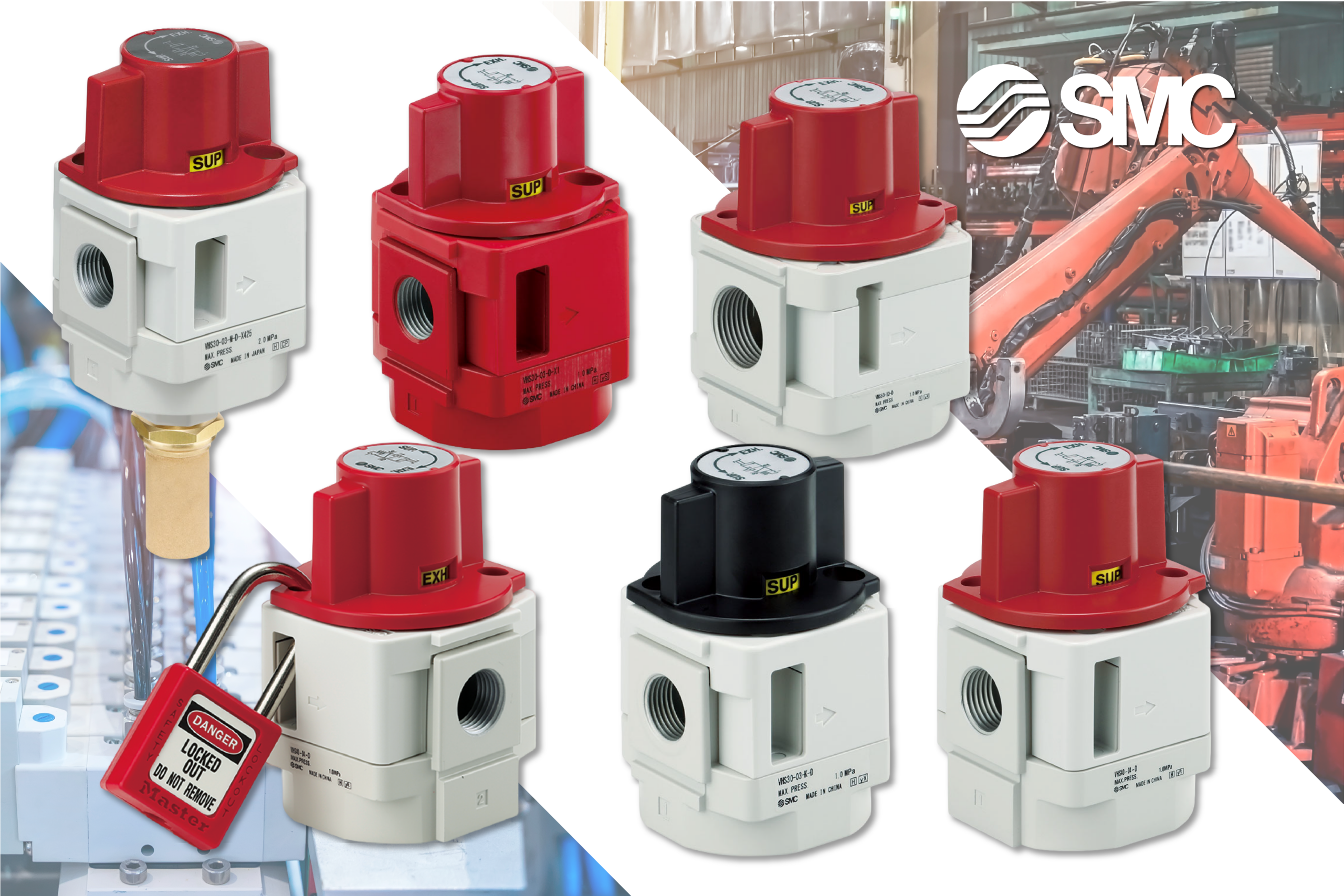

SMC VHS Series Pressure Relief Valve
Safely isolate air supply, exhaust residual pressure and help prevent accidental start-ups during maintenance.
When maintenance is performed on pneumatic equipment, safety starts with proper pressure isolation.
The SMC VHS Series Pressure Relief Valve provides a convenient and reliable means of isolating supplied pressure in a pneumatic system while exhausting downstream pressure for maintenance purposes.
For added safety, the valve can be locked in the exhaust position, making it an integral part of an effective pressure isolation system designed to help protect both personnel and equipment.
Air flow direction is easily identified through clear handle orientation and labelling, giving operators immediate visual confirmation of valve status.
Two-step anti-malfunction operation
Push and turn functionality helps prevent accidental activation
Why Proper Pressure Isolation Matters:
Switching off equipment does not always remove the risk. Residual compressed air can remain trapped within a pneumatic system. An effective pressure isolation system helps ensure that stored pressure is safely released before work begins.
⚠ OSHA (Occupational Safety and Health Administration) requires hazardous sources on equipment to be isolated and secured through lockout or warning tag procedures during servicing and maintenance activities.
Reasons To Choose the VHS Series
➔ Improved Performance
The VHS Series delivers significantly improved flow characteristics, with flow rate improvements of up to 88% compared to previous models.
➔ Reduce Compressed Air Waste
With zero air bleeding while switching the handle, the VHS Series contributes to improved pressure efficiency and reduced air consumption.
➔ Designed for Flexibility:
✓ Single or double-action operation
✓ Mounting brackets
✓ Built-in exhaust silencers
✓ Metal handle options
✓ Modular connection compatibility with FRL units
✓ Red body and flame resistance
SAFETY DOESN’T START AT MAINTENANCE. IT STARTS BEFORE IT.
The SMC VHS Series plays an important role in protecting personnel, reducing operational risk and promoting safer maintenance practices across your facility. When it comes to maintenance safety, knowing the system is isolated isn’t enough.
You need to be certain.


